The Strategy Battle of Momentum vs Mean Reversion Revealed
Momentum vs mean reversion: the strategy battle driving every market move is one of the most fundamental concepts you need to understand as a trader. Whether you are a short-term scalper, a day trader, or an investor with a longer horizon, these two forces often dictate the outcomes of trades. By recognizing how momentum strategies leverage strong directional moves and how mean reversion strategies profit from price corrections, you can align your decisions with the actual state of the market.
You will find that neither strategy is inherently superior. Instead, you need to decide which approach to use based on current market conditions and your own trading style. Below, you will discover insights to help you identify momentum or mean reversion environments, apply these approaches in your trades, and manage the associated risks more effectively.
Recognize the market battle
Any time you open your trading platform, you face a battle between price continuation and price snapback. Momentum-driven moves occur when strong sentiment pushes prices rapidly in one direction. Mean reversion takes hold when price extremes cannot sustain themselves, causing a reversal toward a more typical value.
Research from simulated prop trading challenges shows how closely this battle shapes real outcomes. For instance, many traders aim for a 9% profit target with a 5% drawdown limit. In these scenarios, momentum strategies often reach targets quickly but carry higher risk if the market reverses abruptly. Meanwhile, mean reversion strategies yield steadier gains and higher win rates (often above 65%), though they sometimes struggle if a trend suddenly takes off.
Clarify momentum trading
Momentum trading hinges on the principle that assets demonstrating strong price movement will continue to do so, at least briefly. You buy when prices rise, and you sell when they drop, aiming to ride the wave of existing sentiment.
Why momentum can thrive
Momentum works best when markets are trending. During bull runs, for example, you might see a security moving strongly upward on high volume, fueled by investor optimism. Traders capitalize on this emotional herding, anticipating more buyers will jump in once they notice the rally’s vigor. Monitoring factors like moving average crossovers or consecutive up-close candles can help confirm these surges.
Momentum in practice
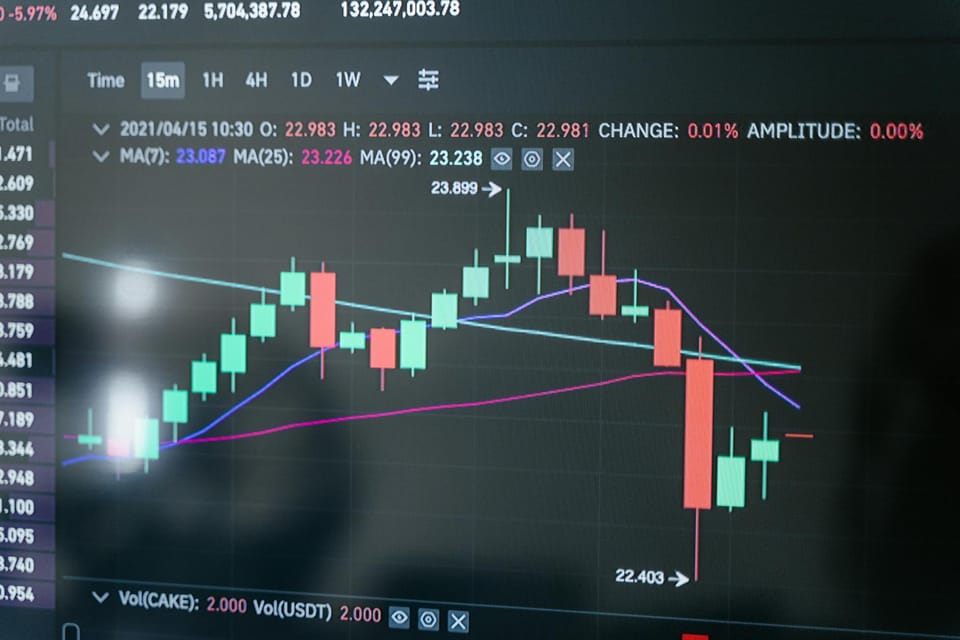
One example of a momentum technique is to wait for a simple moving average crossover. If a short-term average crosses above a longer-term average, it could signal that buyers are outpacing sellers. According to certain post-pandemic data, such strategies sometimes post returns outpacing the broader market, as was the case in 2021 when a Simple Moving Average Crossover strategy delivered a 30% return compared to the S&P 500’s 10%. However, momentum strategies can quickly run into trouble if volatility spikes and the price reverses unexpectedly.
If you want to learn about different ways traders approach such situations, you might look into technical vs fundamental vs quant the showdown of modern trading styles. Understanding the variety of methods available helps you confidently adopt or tweak momentum techniques to match market behavior.
Many traders also study structured examples inside strategy collections like this one to refine how they execute momentum setups.
Clarify mean reversion
By contrast, mean reversion trading assumes price deviating sharply from its historical average will eventually revert. This technique aims to exploit short-term overbought or oversold conditions.
Why mean reversion can thrive
If the market lacks clear direction or is range-bound, mean reversion strategies often perform well. Indicators like Bollinger Bands or RSI can help you spot when prices move too far from their typical level, suggesting that current extremes may soon reverse.
Mean reversion in practice
Imagine a price rapidly shooting up and closing well outside its upper Bollinger Band. You might anticipate an upcoming pullback toward the midpoint. Placing trades at those extremes and capturing small reversals can deliver consistent wins. Many prop traders rely on this tactic to maintain a high win rate—some surpass 65%—especially when they have the patience to wait for price to stabilize around an identifiable mean.
Knowing when to use a mean reversion approach can be tricky, especially if momentum takes hold. That’s why many successful traders simultaneously study both strategies and adjust based on evolving market signs. You can see how these factors align with your broader trading style by checking out which crypto trader are you from? crypto cowboy to crypto grandad.
Spot momentum or reversion
Distinguishing between a momentum regime and a mean reversion regime is crucial for placing better trades. According to an October 2025 Bookmap article, momentum markets often feature fast tape speed, aggressive orders, and disappearing liquidity where price just keeps moving. In contrast, a mean reversion regime appears when large resting orders absorb price fluctuations, tape movement slows, and the market hovers around a fair value zone.
By learning to “read” liquidity, volume, and order flow, you can choose the appropriate approach. If you notice consecutive strong candles and minimal pullbacks, you may try momentum-based entries. But in a sideways environment with repeated oscillations near set boundaries, mean reversion becomes a logical play.
Combine both for success
Sometimes the most effective path is combining momentum and mean reversion strategies. You might switch to mean reversion trades during slower periods, then pivot to momentum tactics when a robust trend emerges. This approach requires you to monitor technical indicators like RSI, Bollinger Bands, and moving averages to identify transitions between range-bound and trending conditions.
Hybrid setups help capture multiple types of opportunities without locking you into an inflexible game plan. For instance, you might build a watchlist of strong momentum leaders while simultaneously scanning for overextended moves ripe for reversion. Adapting in real time is vital—you can see more about switching strategies effectively by reading the adaptable trader how pros switch playbooks when markets flip.
Manage your risk
Whether you prefer momentum or mean reversion, disciplined risk management is non-negotiable. Abrupt reversals or extended trends can quickly erase potential gains. Consider:
- Limiting risk per trade to about 1% of your account.
- Using stop-loss orders at levels that invalidate your setup.
- Adjusting position sizes based on market volatility.
- Maintaining a consistent risk-to-reward ratio that can sustain unavoidable losses.
You might also explore automated tools or AI-driven position sizing that dynamically adapts to shifting volatility levels. Systems like these help preserve your capital amid wild market swings. If you want to see how advanced strategies can integrate with automation, you could look into quant vs discretionary why algorithms win and when humans still outperform.
Summarize your approach
The clash between momentum vs mean reversion: the strategy battle driving every market move plays out across all timeframes and instruments. Learning to recognize which regime you are in—rapid price continuation or inevitable snapback—forms the backbone of effective trading. Momentum appeals to your sense of riding trends, while mean reversion caters to your instinct to buy low and sell high.
By combining these approaches, you gain a flexible toolkit that acknowledges no single strategy works at all times. Set clear criteria that trigger your shift from one tactic to the other, include thorough risk management, and remain alert to changes in market sentiment. This adaptability helps you build a more resilient edge, whether you trade stocks, forex, crypto, or commodities. For more trading tools and resources, you can visit AfterPullback.