Swing Trading: Stop Loss and Take Profit Formulas You Need
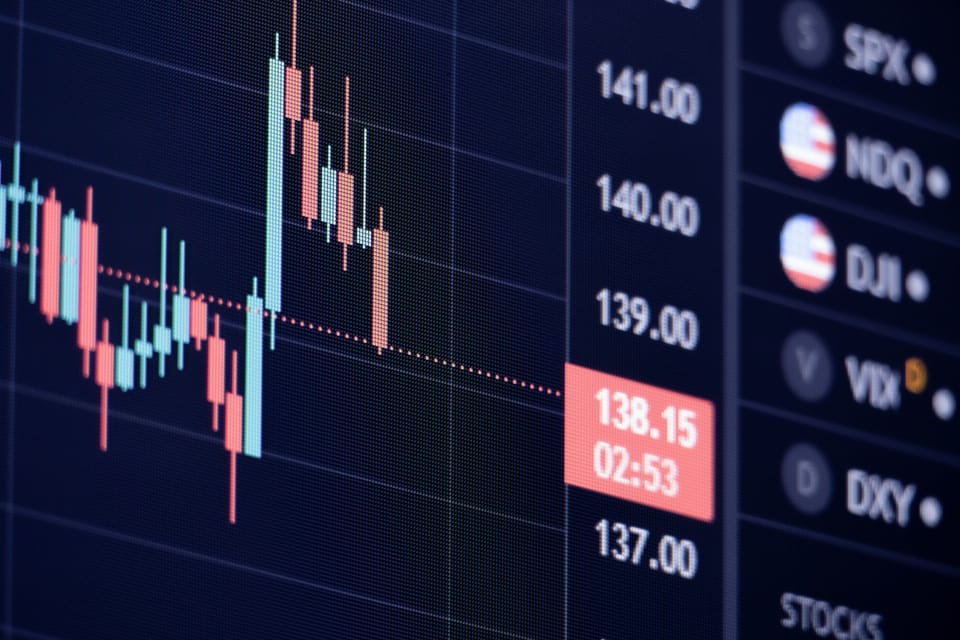
If you are looking to master swing trading: stop loss and take profit calculations for longer-term trades, it is critical to adopt a disciplined, data-informed strategy. Many traders have observed that incorrect stop loss placement can lead to premature exits, while ineffective take profit tactics leave potential profits on the table. By combining the right technical methods with sound risk management, you can develop a more consistent, confident approach to longer-term swing trading.
Recognize the mindset for longer-term trades
Swing trading positions are typically held for days or even weeks, aiming to capture intermediate market swings within an ongoing trend. This timeframe requires more patience than day trading because you are allowing trades to move through normal price fluctuations. Taking a data-oriented view of each position helps prevent fear or greed from undermining your plan.
- Focus on capturing a portion of a broader trend
- Accept that temporary pullbacks will happen
- Look for well-defined entry signals, then allow time for potential profits to accrue
Several experienced traders, such as Larry Connors, Curtis Faith, and those at DE Shaw, have shown through backtesting that when you adapt stop loss and take profit parameters to wider market movements, your trades often stand a better chance of reaching profit targets.
Use proven stop loss approaches
Stop losses in swing trading serve as a safety net to limit the maximum drawdown of any single position. Remember, however, that an overly tight stop can knock you out prematurely. Consider these evidence-based methods to reduce the risk of exiting too soon.
Apply volatility-based stops with ATR
A popular approach for longer-term trades involves the Average True Range (ATR). By using multiples of the ATR — for example, placing your stop loss three times the ATR below the entry price — you account for typical daily or weekly price moves.
- Formula: Stop Loss = Entry Price – (ATR × Multiplier)
- Common usage: 2× to 3× ATR for swing trades
- Benefit: Allows breathing room for normal market swings
- Drawback: Potential for larger losses if the trade moves against you
This ATR-based practice, mentioned in several traders’ research, helps accommodate fluctuations that often trigger stop hunts. With a sensible multiplier, you minimize the odds of being whipsawed out of a good setup.
Try time-based exits
Time-based stops close your position after a specific number of days or weeks, assuming the initial trade thesis has expired. If your charts suggest a move typically completes within a certain window, placing a time-based exit can prevent you from clinging to a stale trade.
- Timely exit: Ends a trade if no meaningful movement occurs within the expected timeframe
- Reduced volatility risk: Avoids the random gyrations that could trigger price-based stops
- Potential drawback: Missing out if the move comes late
Several traders who favor longer hold times suggest combining time-based stops with partial profit-taking to lock in gains if the trade begins to stall.
Consider support or moving average stops
Another approach is to set your stops below key technical levels, such as established support zones or notable moving averages (like the 50-day or 200-day). If price action convincingly drops below these markers, your trade thesis could be invalidated.
- Logical placement: Places stops where your original trade premise fails
- Supports a trend strategy: Aligns with a higher timeframe view
- Possible con: Can require wide margins, leading to larger unrealized losses
Below is a comparative table showing how these stop loss methods stack up:
Stop loss method | How it works | Advantages | Drawbacks |
|---|---|---|---|
Volatility-based (ATR) | Sets stop at multiples of ATR | Reduces premature exits, adjusts for volatility | Risks larger drawdowns if trade fails |
Time-based | Closes trade after a set period | Avoids extended stagnation | May exit right before a price breakout |
Support/moving average-based | Places stop under major technical levels | Validates trend structure | Could be too wide in choppy markets |
Manage risk with position sizing
Even a well-placed stop loss can lead to significant portfolio drawdowns if you overcommit on a single position. Position sizing is about deciding how many shares or contracts to trade so your potential loss remains within acceptable limits (such as 1% or less of your total account per trade).
- Determine how much capital you are willing to risk (e.g., 1% of your account)
- Calculate the distance from your entry price to your stop loss
- Adjust the number of units, shares, or contracts to match your acceptable risk
Some traders start with an even smaller risk allocation — around 0.25% — to gather behavioral data on how their strategy performs under real market conditions. This style of “undersizing” can protect your capital and help you refine your techniques.
If you want to explore further on securing your trades with calculated stops, you might also find our resource on stop loss and take profit formulas: essential calculations for every trader helpful.
Establish a clear take profit plan
In swing trading, your take profit level determines when to lock in gains. The challenge is setting a threshold that reflects realistic upside potential while leaving room for the trade to continue moving.
Set risk-reward thresholds
Prioritizing a favorable risk-to-reward ratio, often 2:1 or 3:1, is a common principle in swing trading. This means you aim for twice or three times the potential gain compared to what you are risking.
- Example: If your stop loss is 5% below entry, consider a 10% to 15% target
- Ensures profitable outcomes even with modest win rates
- Increases the likelihood that one strong winner offsets multiple small losses
According to swing trader Cory Mitchell, focusing on at least 3:1 fosters disciplined trade selection. If you consistently hold out for a higher ratio, you can absorb losing trades and still preserve long-term profitability.
Consider partial exits
Some traders opt to take partial profits at an initial target, then let the rest ride with a trailing stop. This approach allows you to realize gains early while retaining a position for potentially larger moves.
- Lock in a portion of profits, reducing emotional stress
- Move your stop loss to breakeven to protect remaining position
- Trailing stops can still be triggered prematurely if volatility spikes
For instance, you might sell 50% of your shares when the price hits 2× your risk. You then raise the stop to your entry, aiming for a higher profit target with the leftover shares.
Combine strategies and refine
Even top-tier traders refine their methods based on ongoing results. Including a stop loss does not mean you must rely solely on price-based triggers. You can synchronize volatility-based, time-based, and support-based stops to suit shifting market attitudes. This multi-method approach recognizes that no single formula will perform best at all times.
- Experiment with a small portion of your portfolio in paper trading for at least two months
- Track each trade’s entry, exit, and rationale in a journal
- Adjust your stop loss and take profit guidelines when market conditions change
If you also want to apply these formulas in other markets, you can see our post on cryptocurrency trading: how to calculate stop loss and take profit effectively. You may discover new ways to diversify and hedge your overall risk profile.
By testing these methods in realistic scenarios, you will gain the insights needed to optimize each trade and improve your resilience when the market turns volatile.
Learning how to implement swing trading: stop loss and take profit calculations for longer-term trades goes beyond applying a fixed formula. It means committing to a comprehensive risk management framework — one backed by data, validated through backtesting, and refined by real-world experience. With careful position sizing, well-researched stop placement, and a smart take profit strategy, you can aim for steady growth while minimizing outsized losses. For additional trading tools and scanners, visit AfterPullback.